
Before you light a wood burner or open fire for the first time this autumn, take 15 minutes to look at the chimney from the garden path. You do not need to climb a ladder or walk on a roof. A pair of binoculars, a clear view and a working carbon-monoxide alarm are enough to identify the things that should be dealt with before winter.
The useful distinction is simple: a sweep deals with the flue; a mason assesses the exposed stack, pots and mortar; a roofer deals with lead flashing and adjoining roof coverings. If you see a lean, loose masonry, cracked flaunching or damaged brickwork, arrange a professional assessment rather than treating it as a DIY pointing job.
Northamptonshire Fire and Rescue Service advises residents to keep chimneys and flues clean and well maintained before the colder months. It recommends using a professional sweep and provides practical chimney and log-burner fire-safety guidance. Read Northamptonshire Fire and Rescue Service's chimney and log-burner fire-safety guidance.
Seen something that concerns you? Contact United Masonry Northampton for a free estimate, or call 07576 552408. A ground-level photo of the stack and your postcode gives the team a useful starting point.
Which specialist should you call?
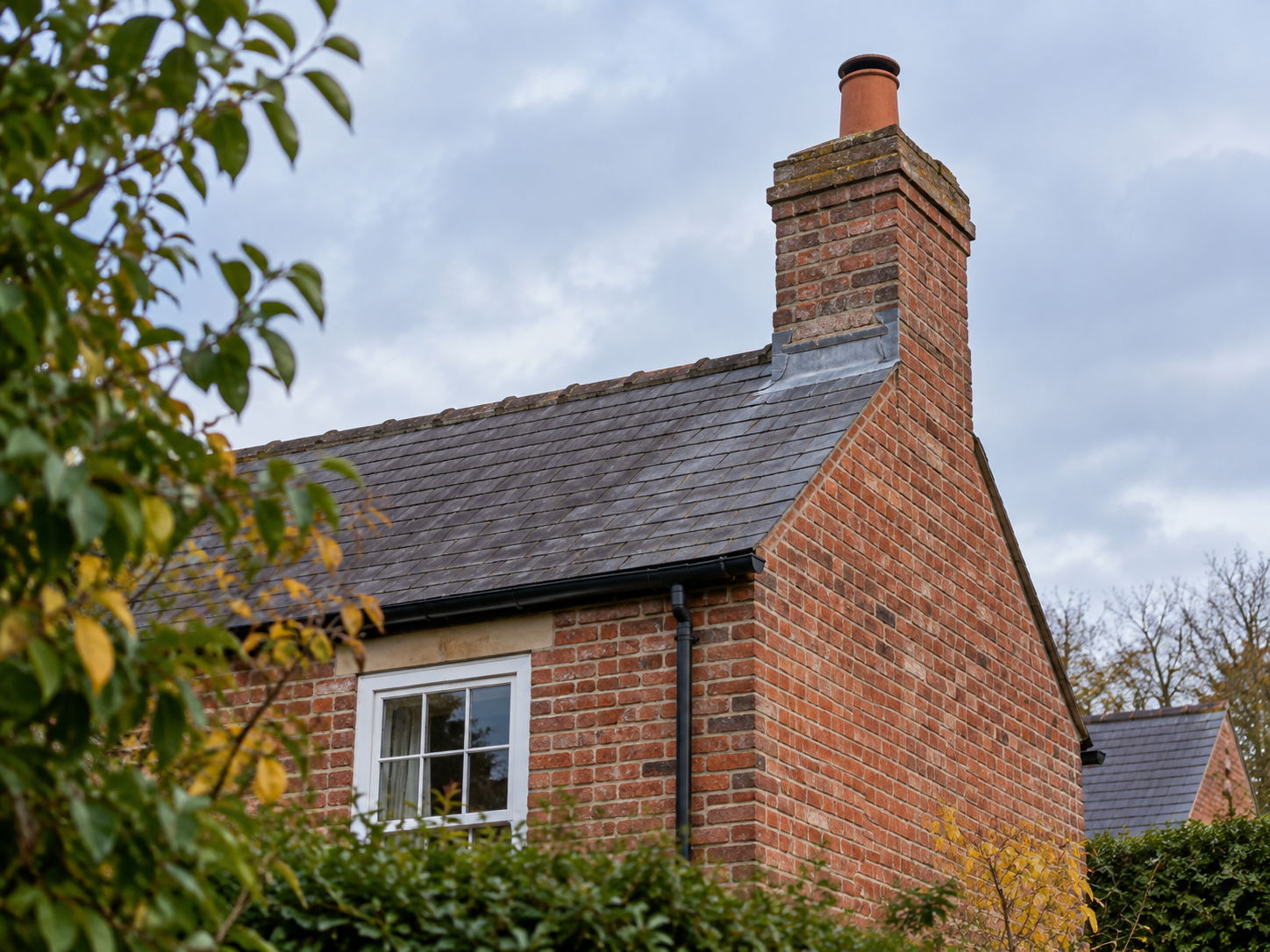
One visit does not necessarily cover every part of a chimney system. Asking the right professional first avoids work being missed or a masonry company being asked to certify a flue.
| Concern | Best first call | What that professional can assess |
|---|---|---|
| Soot, bird debris, poor draw or an unknown sweep history | Professional chimney sweep | Cleaning and inspecting the flue and issuing the service documentation they provide. |
| Open joints, spalled bricks, cracked flaunching, loose pot or a leaning stack | Mason | The masonry stack, pot bedding, pointing, flaunching and whether repair or rebuilding is required. |
| Lifted leadwork, damaged roof tiles or a leak at the roof junction | Roofer | Flashings, adjacent roof coverings and water-shedding details. |
| New stove, flue liner, appliance change or hearth work | Competent solid-fuel installer | The appliance and flue installation, including any certification or Building Regulations route required. |
Approved Document J is the English guidance covering combustion appliances, flues and chimneys. It is relevant when an appliance or flue system is installed or altered; it does not turn routine external masonry maintenance into a flue inspection. See the current Approved Document J publication.
The 10 point garden path check
Do this from the ground, in daylight, without climbing a ladder. Do not touch a pot, cowl or flue terminal. If you see a red flag, take a clear photograph from a safe position and book the relevant specialist.
| Look for | What it may mean | Sensible next step |
|---|---|---|
| 1. A stack that appears to lean or has a widening crack | Possible movement or unstable masonry | Keep clear of the area below and arrange a masonry assessment promptly. |
| 2. Cracked or missing mortar around the pots | Flaunching may no longer be shedding water properly | Ask a mason to inspect the pot bedding and stack condition. |
| 3. A chipped, cracked or displaced pot | A damaged pot can become unsafe in high winds | Do not approach beneath it; arrange a professional inspection. |
| 4. A missing or damaged cowl or guard | Rain, birds or downdraught may affect the flue | Ask a sweep or installer about flue needs; use a mason only for the masonry-side fixing where appropriate. |
| 5. Repeated bird activity at the terminal | Nesting or a partial blockage is possible | Book a professional sweep; do not try to clear the flue yourself. |
| 6. Flaking brick faces above roof level | Saturation, frost damage or unsuitable past repairs may be involved | A mason should assess brick condition and compatible repair materials. |
| 7. Open or hollow mortar joints | Weathered pointing can let water into the stack | Arrange a masonry inspection before assuming every joint needs replacement. |
| 8. Lifted or visibly split leadwork | A flashing or roof-covering issue may be admitting water | Contact a roofer; do not rely on surface sealant as a diagnosis. |
| 9. Damp staining on the chimney breast | Rain penetration, condensation or a flue-related issue may be involved | Investigate the cause; a mason, roofer and sweep may each have a role. |
| 10. CO or smoke alarms that do not test correctly | An important safety layer is missing | Replace or service alarms in line with the manufacturer instructions and investigate any appliance concern. |
The check is deliberately limited. A stack can look acceptable from below while a sweep finds a flue problem; equally, a clean flue does not confirm that the exposed brickwork or flaunching is sound. Treat the garden-path check as a way to decide who to call, not as a safety certificate.
How often should a chimney be swept?
Frequency depends on the fuel burned and how often the appliance is used. Northamptonshire Fire and Rescue Service advises cleaning chimneys four times a year for wood, twice a year for coal, and at least once a year for smokeless fuels, oil or gas. The appliance manufacturer and the sweep's advice should take priority where they recommend a different interval.
| Fuel or use | Practical pre-winter action |
|---|---|
| Wood-burning stove or open fire | Book a professional sweep before regular winter use; follow the recommended frequency for your appliance and fuel. |
| Coal or smokeless fuel | Confirm the appropriate sweep interval with a professional; coal can require more frequent cleaning. |
| Oil or gas appliance with a chimney or flue | Keep servicing and flue checks with the appropriately qualified professional. |
| Unused chimney | Still inspect from the ground for pots, nests, masonry and water ingress; ask a sweep whether clearing is required before reuse. |
If you have just moved into a Kingsthorpe, Abington, Duston, Weston Favell or Moulton home and do not know the sweep history, do not light the appliance until you have had professional advice. The same applies to a rural property with a tall exposed stack: its masonry and leadwork may need separate assessment even after the flue has been swept.
Carbon monoxide and chimney fires
Carbon monoxide has no colour, smell or taste. An audible alarm is an important safeguard, but it is not a substitute for sound installation, servicing and sweeping. Government guidance says audible alarms meeting British or European standards, including BS EN 50291, can help protect against high-level exposure; it also advises keeping chimneys and flues clean and having fuel-burning appliances serviced by appropriately qualified people. Read the Government's carbon-monoxide guidance.
For a new or replacement fixed solid-fuel appliance in a dwelling, Approved Document J says a CO alarm should be provided in the room containing the appliance and gives siting guidance. Landlords have separate legal duties for alarms in rooms used as living accommodation with fixed combustion appliances. Follow the alarm manufacturer's instructions for siting, testing and replacement, and get current legal advice for a rental property.
If you suspect carbon-monoxide exposure, leave the property and seek urgent medical and safety advice. If there is a chimney fire, Northamptonshire Fire and Rescue Service says to get out, stay out and call 999. If safe to do so on your way out, close air vents and flue dampers; never re-enter until it is safe.
When the masonry side needs attention before winter
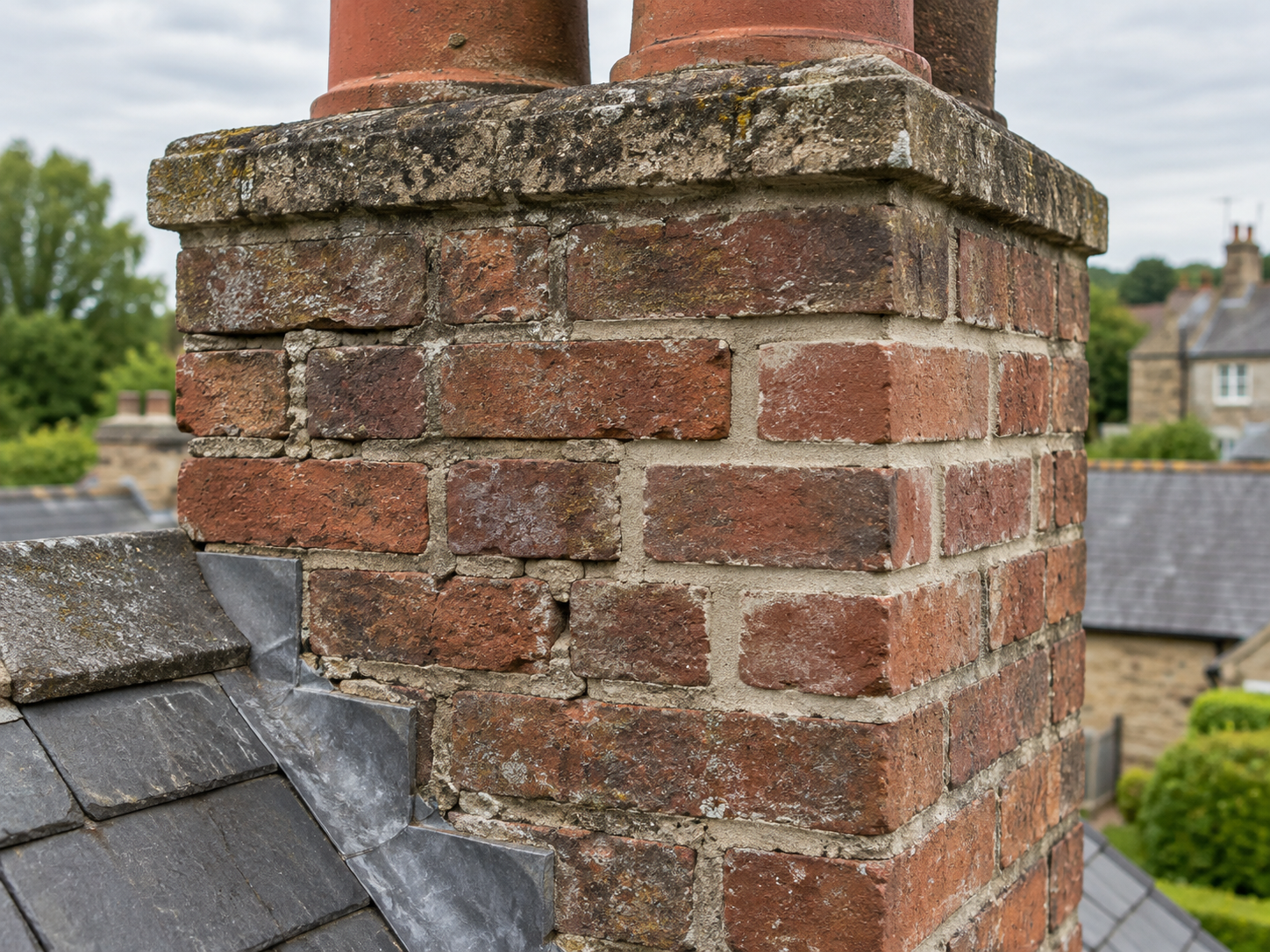
The most important visible signs are a lean, loose or cracked pot, damaged flaunching, brick faces breaking away, and open joints high on the stack. These defects can allow more water into masonry already exposed to wind and frost. They are not a cue to buy a bag of mortar and climb up yourself.
Older terraces in Northampton may have softer historic brick or past repairs that need careful material matching. Historic England advises that repairs to older walls should match existing materials as closely as possible, and warns that impermeable modern repair materials can make decay worse in traditional fabric. Its guidance on repairing older walls explains the principle.
A sound proposal for chimney masonry should identify the specific defects, the safe access required, whether any bricks need replacing, the repair mortar, and how the work will be protected from unsuitable weather. United Masonry Northampton's chimney repair service is the relevant route for stack, pot-bedding and masonry-repair enquiries. Flashing and roof-covering problems should be directed to a roofer.
What will chimney repair cost?
The cost depends on access, the height and condition of the stack, scaffolding, the amount of brick replacement, the mortar specification, and whether a roofer or sweep must attend separately. A small area of pointing and a rebuilding job are not comparable scopes. This article therefore does not publish a generic Northampton price band.
Ask for an on-site estimate that separates masonry work from flue sweeping, appliance work and roof repairs. It should also identify anything that cannot be confirmed until safe access is in place. That makes the decision clearer than a low phone quote which does not mention access or the condition of the stack.
A quick extra check for wood-burner homes
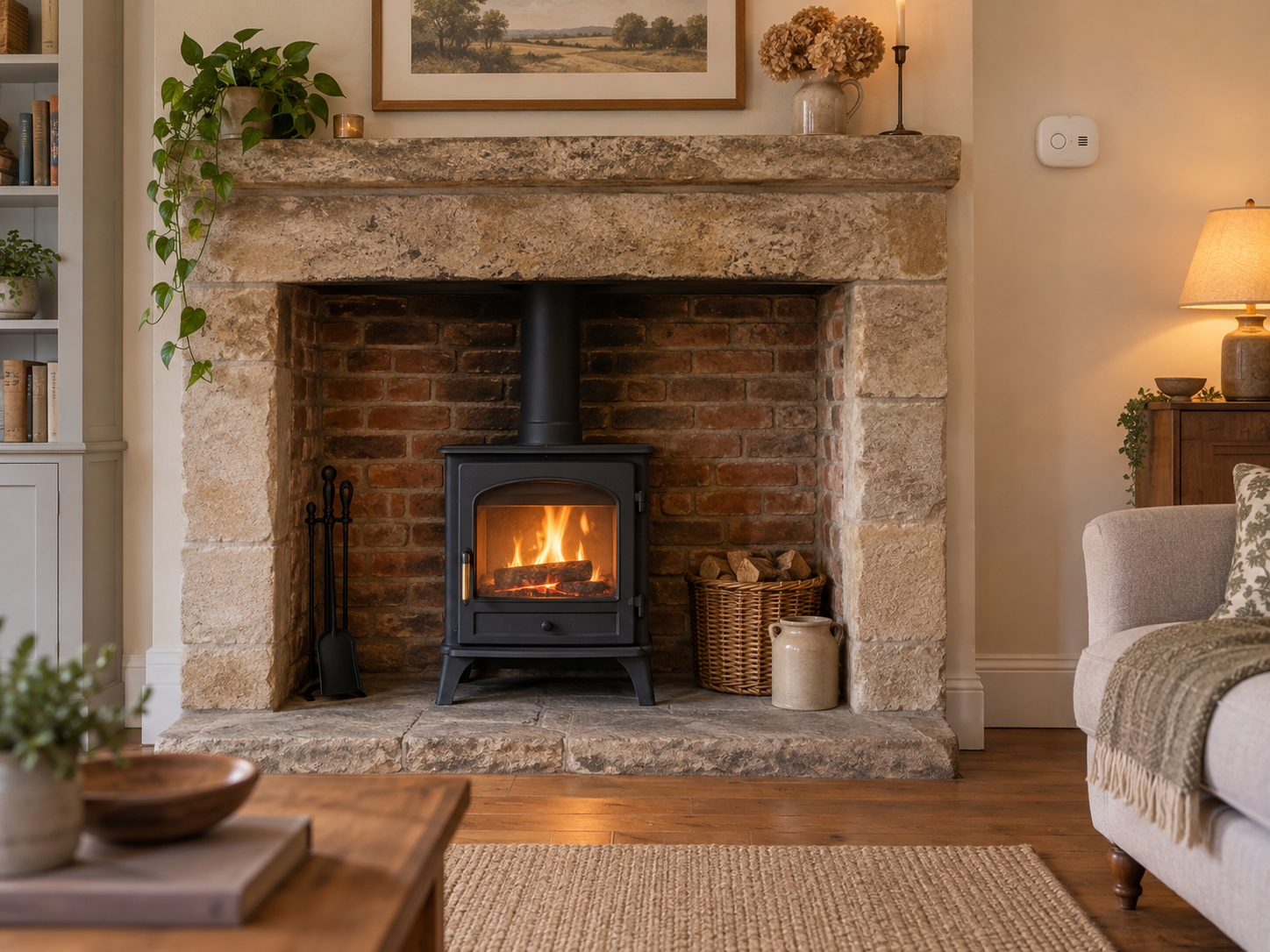
Before first use each season, confirm that the appliance has been serviced or inspected as appropriate, the flue has been swept to the recommended interval, and the CO alarm tests correctly. Do not alter a flue liner, appliance connection or hearth yourself. Those tasks need the appropriate competent installer and may have Building Regulations implications.
Outside, use the ground-level check for the stack itself. If you see spalled brick, receding joints or damaged flaunching, arrange a masonry assessment. Keeping the roles separate is not red tape; it is how the flue, appliance, stack and roof details each receive the right inspection.
Frequently asked questions
When should I check my chimney before winter?
Check it before you expect to use the appliance regularly, ideally while there is time to book any sweep, masonry or roof work found. A safe ground-level check and a professional sweep are more useful than waiting until the first cold evening.
Can I inspect my chimney myself?
You can carry out a visual check from the garden path with binoculars. Do not climb a ladder, go onto the roof, touch a pot or attempt to clear a flue. A visible lean, loose material or damage high on the stack needs a professional assessment.
What are the signs of an unsafe chimney?
Visible leaning, loose or broken pots, badly cracked flaunching, displaced brickwork, open joints, unusual damp around the chimney breast, fumes or a CO alarm activation all need attention. The correct specialist depends on whether the concern is the flue, masonry, appliance or roof detail.
Does an unused chimney still need attention?
Yes. It can still suffer from birds' nests, moisture penetration, damaged pots and decaying mortar. Check the exterior from the ground and seek advice before bringing it back into use.
Does a sweep check the chimney stack?
A sweep focuses on the flue and its cleanliness and condition. The exposed masonry stack, pot bedding and pointing may need a separate masonry inspection; flashings and roof coverings are normally a roofer's work.
Do I need a carbon monoxide alarm?
For new or replacement fixed solid-fuel appliances, Approved Document J contains requirements and guidance for a CO alarm in the appliance room. Landlords have additional duties. Whatever the property type, an audible alarm to the appropriate standard is a sensible safety measure, but it does not replace servicing or sweeping.
Book the right check before your first fire
If your garden-path check shows a stack problem, contact United Masonry Northampton for a free estimate and include ground-level photographs if you can take them safely. The team serves Northampton and surrounding areas from Kingsthorpe and can advise on the masonry side of the repair.
If the stack appears sound but the sweep is overdue, book a professional sweep before you light the appliance. If the concern is a roof leak or flashing, contact a roofer. The aim is not to turn every autumn check into a repair; it is to spot the problems that should not be left for another wet, cold season.