
After a wet Northampton autumn, the first clue is often not a loose joint but a flaking brick face below a sill. For a Victorian or Edwardian solid-wall terrace, lime is usually the compatible choice because it lets moisture move through a softer, sacrificial joint. For a modern brick-and-block home, cement mortar can be the right material. The important rule is simple: the mortar should be weaker than the brick or stone around it.
We have worked on masonry across Northampton since 2015, including Kingsthorpe, Abington and surrounding villages. This guide explains what to look for before you commission repointing — and why an inspection matters more than a one-size-fits-all mortar specification.
The short answer — lime or cement?
Choose a suitable lime mortar for older, solid-wall construction with soft handmade brick, historic stone or original lime joints. Choose cement mortar where the wall is modern, dense and designed as a rigid brick-and-block system. Neither material is automatically “better”; compatibility with the existing masonry is what protects the wall.
| Property / condition | Usually the starting point | Why |
|---|---|---|
| Pre-1919 solid-wall brick or stone | Compatible lime mortar | Allows a softer, vapour-permeable joint to weather before the masonry. |
| Modern brick-and-block construction | Appropriate cement mortar | Matches the wall’s denser, more rigid construction. |
| Chimney, coping or very exposed area | Specification after inspection | Exposure, detailing and masonry condition determine the suitable grade. |
What is lime mortar?
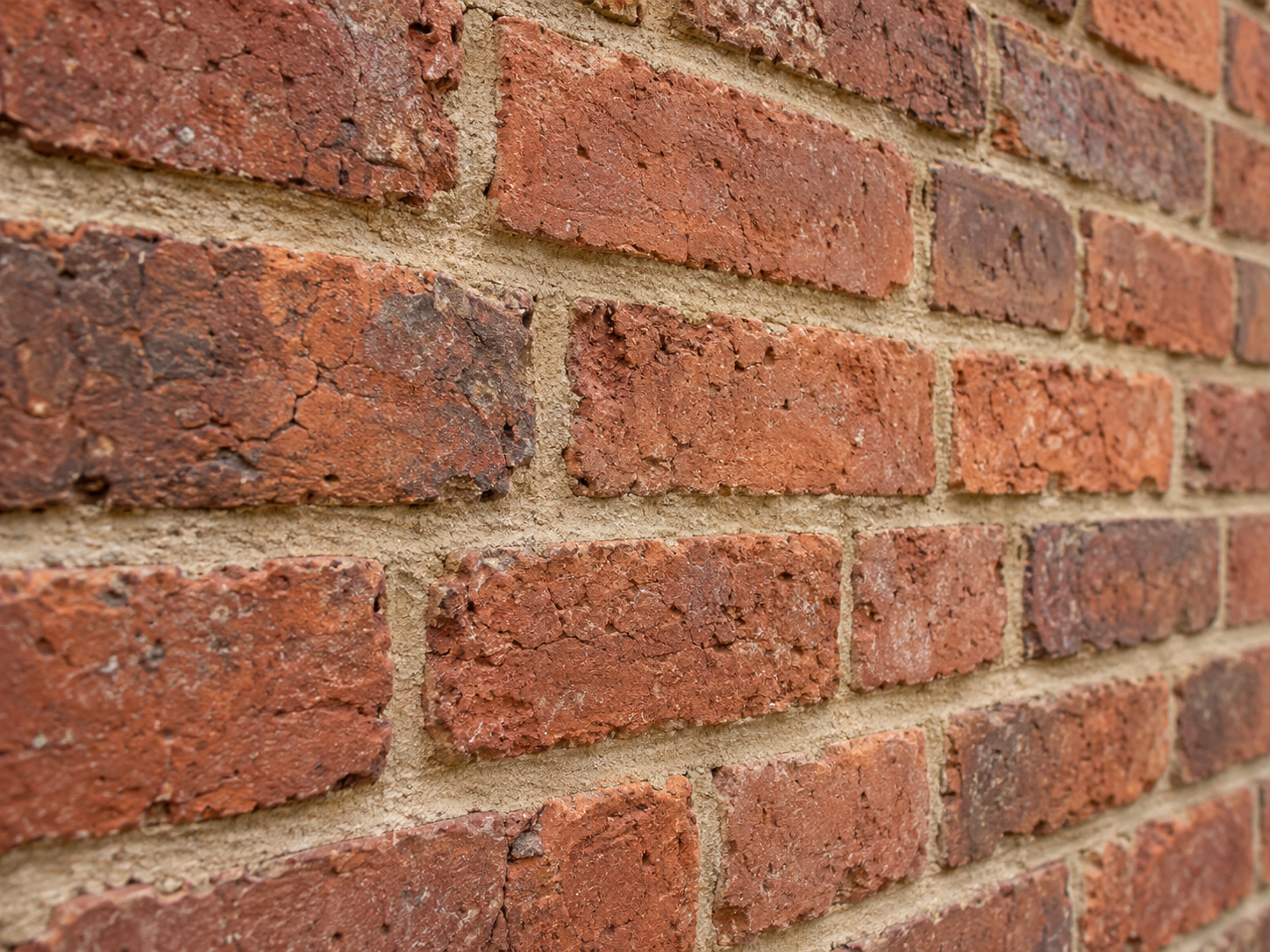
Lime mortar is a traditional binder mixed with sand. It is often described as “breathable”, meaning it is vapour-permeable: moisture can disperse through the joint and evaporate rather than being trapped behind an impermeable repair. It is also deliberately more flexible and sacrificial than many older bricks and stones.
Lime putty and natural hydraulic lime (NHL)
Lime putty is non-hydraulic and cures principally through carbonation. Natural hydraulic lime (NHL) has a controlled hydraulic set as well as carbonation, which makes it practical for many external repairs. NHL is not interchangeable with cement: it is selected by grade, aggregate, exposure and the masonry it must protect.
What is cement mortar — and when is it right?
Cement mortar uses Ordinary Portland Cement (OPC) and sets faster to a harder, more rigid finish. That is useful on modern brick-and-block homes, engineering brick and work designed for a strong, dense mortar. It is not a villain; it is simply unsuitable when it is harder and less permeable than old brick or stone. On a newer Northampton estate house, a compatible cement mortar may be entirely correct.
The real difference between lime and cement mortar
| Feature | Lime mortar | Cement mortar |
|---|---|---|
| Moisture movement | More vapour-permeable | Usually less permeable |
| Strength and movement | Softer and more accommodating | Harder and more rigid |
| Weathering role | Designed to be sacrificial | Suited to modern dense masonry |
| Setting | Slower; needs careful curing | Faster and more forgiving |
| 2026 UK guide | About £60–£90/m² | About £40–£70/m² |
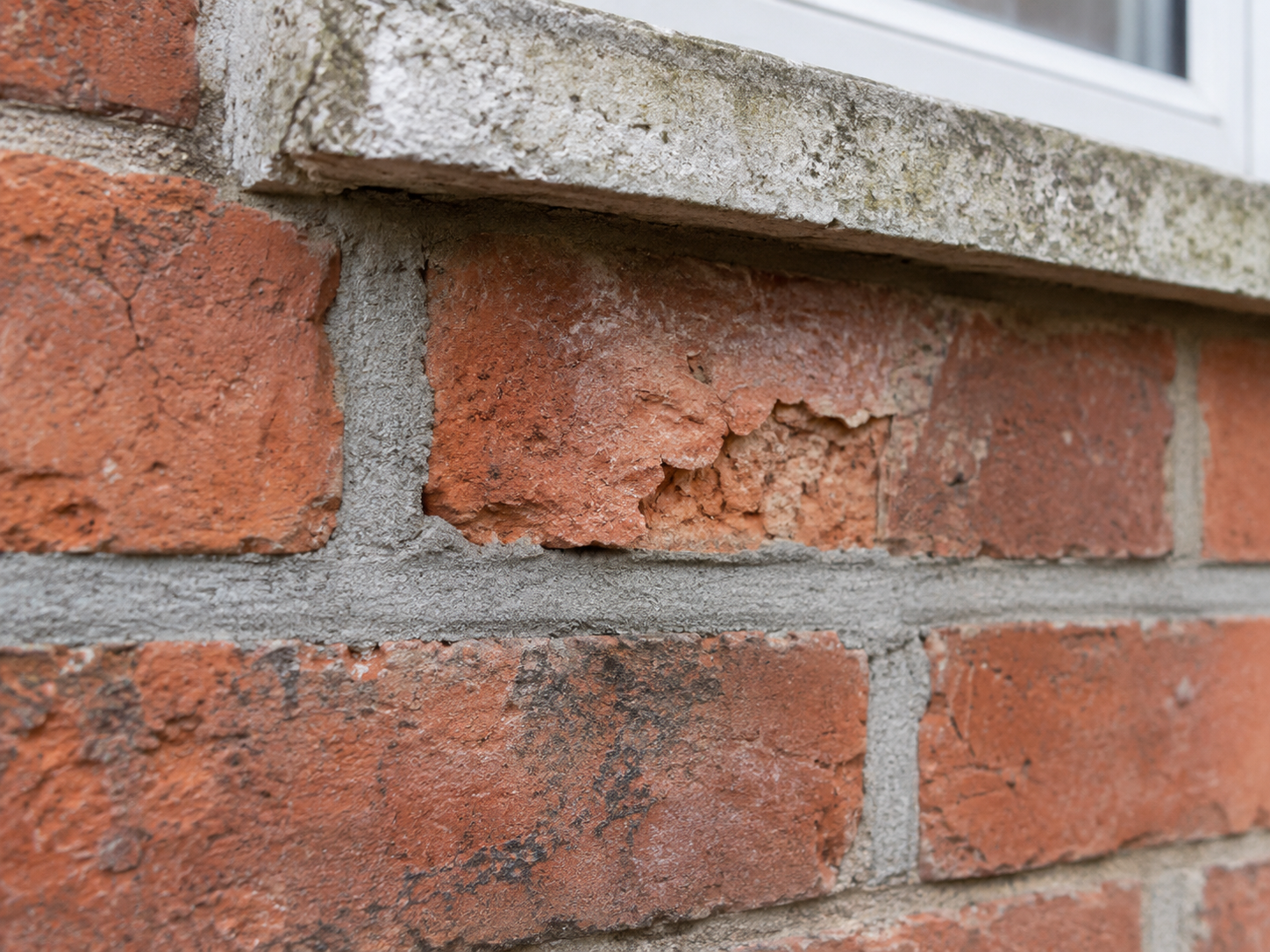
On soft old brick, a hard cement joint can force moisture to escape through the brick face. Repeated wetting, drying and freeze-thaw cycles may then cause spalling. Historic England notes that unsuitable repointing can affect both the appearance and durability of historic masonry; its repointing guidance is useful background for older buildings.
How to tell which your house needs
Start with the age and wall construction
A pre-1919 or pre-1920 Northampton terrace is likely to be solid-wall construction and commonly began life with lime mortar. A cavity wall on a newer home is different. Age is a strong clue, not a final specification: altered walls and previous repairs need to be examined.
Use the coin check carefully
You can gently observe whether an inconspicuous brick edge seems soft enough to mark easily with a coin, but do not scratch sound masonry or rake out a joint yourself. This is a prompt to ask for a professional assessment, not a conclusive DIY test.
Look for signs of unsuitable hard pointing
- hard grey joints sitting proud of softer brick;
- brick faces flaking beneath sills or near the ground;
- raised ribbon pointing smeared across brick edges;
- recurrent damp staining after gutters and downpipes have been checked; and
- one very hard repair patch in an otherwise soft historic wall.
What this means for a Northampton property
Northampton’s Victorian and Edwardian red-brick terraces, especially around Abington and Kingsthorpe, often need a more considered approach than a quick hard-grey patch. Northamptonshire ironstone and oolitic limestone boundary walls also need mortar that complements the stone. Driving rain, winter frost and local exposure all affect the right choice.
In our experience, the common repair call on an older terrace is not simply “bad mortar”: it is hard pointing combined with moisture management issues and a soft brick face beginning to flake. The practical next step is to inspect the brick, the existing joint and nearby rainwater details together. See our stone wall repointing service for how we approach compatible repairs.
Repointing is normally routine maintenance, but listed buildings and conservation-area properties can have additional constraints. Check with the local planning authority before changing a historic mortar specification or joint profile.
NHL grades and mixes — a quick guide
| NHL grade | Typical role | Important note |
|---|---|---|
| NHL 2 | Softer, sheltered or internal work | Use depends on the existing fabric and exposure. |
| NHL 3.5 | Common starting point for solid-wall repointing | Often considered for typical external period brickwork after inspection. |
| NHL 5 | More exposed elevations, copings and chimneys | Not a universal upgrade; harder is not automatically better. |
A typical lime:sand mix is often in the region of 1:2.5 to 1:3, but the sand, original mortar, brick and weather exposure matter as much as a ratio. Lime work should be protected while it cures; mild spring or autumn conditions are generally kinder than frost, strong sun or heavy rain. This is why a period-property repoint is best specified by a specialist rather than treated as a generic DIY mix.
Joint profile matters as much as the mix
A compatible mortar can still look and perform poorly if it is finished in the wrong profile. On older brickwork, the joint should respect the original width and character of the elevation. A neat flush or lightly weathered finish is often appropriate where it matches the existing work; bucket-handle and weather-struck finishes need to be chosen for the wall, not simply because they are quick to form.
Raised ribbon pointing is a warning sign when it has been smeared over the brick arrises. It can look heavy on a period frontage and may encourage water to run onto the brick face. Equally, aggressively recessed joints can leave brick edges unnecessarily exposed. The right finish follows the existing evidence, keeps the face of the brick clean and allows the joint to do its sacrificial job. If a conservation area or listed building is involved, the original joint design and mortar may need closer investigation before work begins.
Good preparation is not glamorous, but it is decisive: failed mortar is removed carefully, joints are cleaned without damaging brick edges, and new mortar is compacted in sensible layers. A contractor should explain their approach before quoting, particularly where soft brick, stone or a chimney is involved.
Can you mix lime and cement mortar?
Do not tip OPC into NHL and expect the result to behave like lime: it compromises the breathability and flexibility you selected lime for. Weak gauged lime-cement-sand mixes exist in trade practice, but they are a compromise. For soft historic brick or stone, the starting point should be a compatible lime specification based on the wall — not a convenience mix.
What does it cost in 2026?
These are UK guide ranges, not a promise for a particular wall. Northampton work is often around the middle of the national range rather than London premium, but access, preparation and condition determine the final figure.
| Item | 2026 UK guide | What changes the price |
|---|---|---|
| Cement repointing | £40–£70/m² | Joint depth, access and amount of preparation. |
| Lime repointing | £60–£90/m² | Careful preparation, curing and compatible materials. |
| Scaffolding | £500–£1,500+ | Often the largest variable on a small high-level job. |
| Full terrace | £2,000–£4,500 | Elevation count, condition and access. |
| Full semi | £3,000–£6,500 | Wall area, access and repair scope. |
We do not use a one-price-fits-all figure. A free on-site estimate lets us see the mortar, brick, access and any associated repair before recommending a scope.
How to choose a contractor who will get it right
Ask whether the contractor has considered the building age, the existing mortar, brick softness, exposure and the source of any damp. A good proposal explains the preparation, mortar choice, test panel and joint profile. Be cautious of blanket cement advice, raised ribbon-pointing photos, or a quotation that does not ask a single question about the wall.
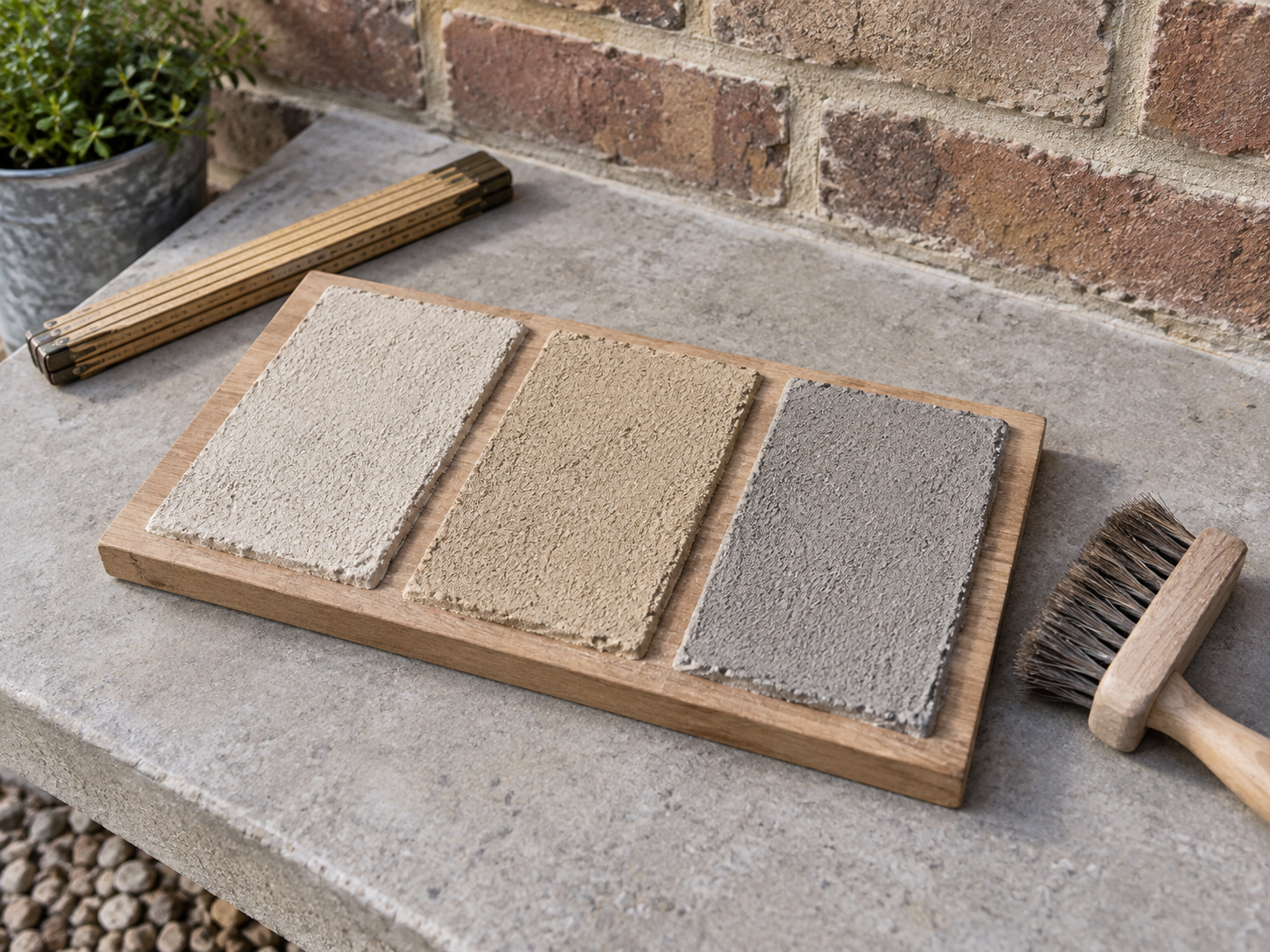
For a visible period elevation, a small test panel can confirm colour, texture and finish before wider work proceeds. You can also view examples in our gallery and discuss a compatible repair with our team via contact.
Frequently asked questions
Is lime mortar better than cement mortar?
Neither is universally better — it depends on the wall. Lime is the right choice for pre-1919 solid-wall and period property with soft brick or stone, because it is breathable and sacrificial. Cement is the right choice for modern brick-and-block homes built to work as a rigid structure.
Can you mix lime and cement mortar?
You should not add Ordinary Portland cement to natural hydraulic lime: it reduces the breathability and flexibility that make lime appropriate for older masonry. A weak gauged lime-cement-sand mix is used on some jobs, but on a genuine period property it is a compromise rather than true lime work.
Why should I not use cement mortar on an old house?
Hard cement can be stronger and less breathable than soft historic brick. It may hold moisture in the wall, so frost action can damage the brick face rather than the joint. Mortar should normally be weaker and more sacrificial than the masonry unit.
What mortar should I use on a Victorian house in Northampton?
A compatible natural hydraulic lime is often appropriate for a Victorian solid-wall repoint, commonly NHL 3.5, with NHL 5 reserved for more exposed work such as copings and chimneys. The existing mortar, brick condition and exposure still need an on-site inspection before a mix is specified.
How can I tell whether my brick needs lime?
Age is a useful clue: a pre-1919 property was commonly built with lime mortar. You can observe whether a brick edge marks very easily with a coin, but do not scratch sound masonry or rely on a single test; a specialist should confirm the material and condition.
What are signs of bad cement pointing?
Look for flaking brick faces, hard grey mortar sitting proud of softer brick, raised ribbon-like pointing across brick edges, and recurring damp or staining. These signs need an assessment because water sources, brick condition and previous repairs all affect the answer.
How much does lime repointing cost compared with cement?
As a 2026 UK guide, cement repointing is commonly around £40–£70 per m² and lime repointing around £60–£90 per m². Access and scaffolding can make a substantial difference, so a firm local quotation needs a look at the wall.
How long does lime mortar take to dry?
Lime cures slowly by carbonation over weeks rather than setting hard in hours. It needs protection from frost, heavy rain and strong sun while it cures, so suitable mild conditions and careful planning matter.
Get the mortar right the first time
Whether you own a Victorian terrace, a stone boundary wall or a newer brick-and-block house, the answer starts with the masonry already there. We inspect the existing mortar and brick before we recommend anything. Call or text 07576 552408, or use the form to request a free, no-obligation on-site estimate. For more on the service, see repointing in the right mortar.