
Brickwork rarely fails all at once. More often, the mortar joints begin to weather away, hold moisture, or open at vulnerable edges long before a wall looks dramatic. A quick check from ground level can help you decide whether to monitor the area, arrange a masonry assessment, or seek urgent advice for a possible structural problem.
This guide is for observation, not DIY diagnosis. Stay on the ground, do not climb ladders or roofs, and do not pull at loose bricks or chimney masonry. If a wall is leaning, bulging, visibly moving, or shedding material over a route people use, keep clear and arrange professional help.
What repointing is — and what it is not
Repointing is the careful renewal of mortar in the outer part of a masonry joint. Done well, it helps joints shed rain and supports the wall's ability to manage moisture. It is not simply smearing new mortar over the face of old joints, and it is not a cure for every crack, damp patch or damaged brick.
The first question is always *why* the joint has deteriorated. A localised patch beside a leaking gutter needs the water source addressed. A stepped crack, bulging wall or loose brick could call for investigation beyond ordinary repointing. Historic England's repointing guidance also advises that compatible materials and techniques matter: inappropriate repairs can trap moisture or accelerate damage in older masonry.
For a professional, Northampton-focused assessment, see United Masonry Northampton's stone wall repointing service.
The safe 10-point garden-path inspection
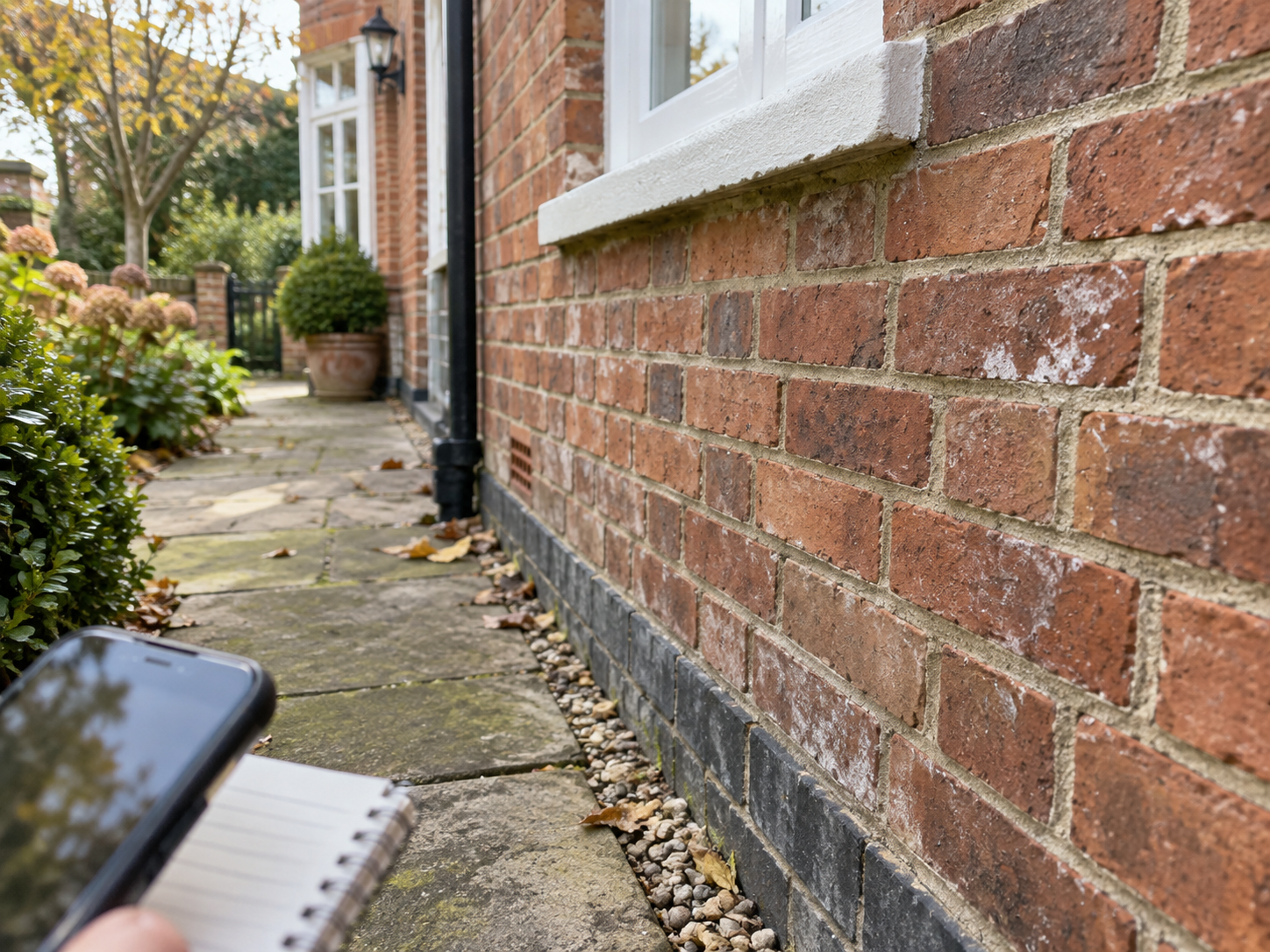
Walk slowly around the accessible sides of the property in good daylight. Take clear photographs from a safe distance and note where each issue appears. Comparing those photos over time is often more useful than trying to judge a single joint in isolation.
| Check | What to look for | What it can mean |
|---|---|---|
| 1. Mortar dust | Fine sandy debris beneath a wall or at the base of a chimney | Weathered mortar may be breaking down, especially on exposed elevations. |
| 2. Open joints | Gaps, deep recesses or joints where the mortar has fallen away | Rain can enter more easily; a survey can confirm the extent and cause. |
| 3. Crumbling edges | Joints breaking away at corners, below sills or around openings | These are often high-exposure areas and may need a targeted repair. |
| 4. Localised patches | One small area looks much worse than the rest | Check for failed gutters, downpipes, flashings or splashback nearby. |
| 5. Damaged brick faces | Flaking, cracking or soft brick surfaces | The bricks as well as the mortar may need attention; do not assume repointing alone is enough. |
| 6. Cracks | Fine, stable-looking marks versus widening or stepped cracks | A changing, stepped, wide or recurring crack warrants professional assessment. |
| 7. Damp marks or growth | Dark staining, algae or moss near persistently wet joints | Often a moisture-management issue; identify the water source before repairs. |
| 8. White salts | A pale, powdery deposit on brick or mortar | Moisture is moving through the wall. The underlying cause matters more than brushing off the surface. |
| 9. Chimney condition | From ground level only: missing mortar, open joints, staining or debris below | Chimneys are highly exposed. Do not inspect from a roof or ladder; book a safe inspection. |
| 10. Previous repairs | Hard, proud, cracked or colour-mismatched mortar patches | Different mortars behave differently. An older wall needs a compatible specification, not a generic patch. |
A note on the “finger test”
It is reasonable to notice whether loose surface material comes away without force. It is not a reason to dig into sound joints, scrape them with tools or remove mortar yourself. Sound historic fabric should not be taken out merely to make it look new; the repair should be limited to defective areas and specified for the wall, as Historic England explains.
A simple traffic-light guide
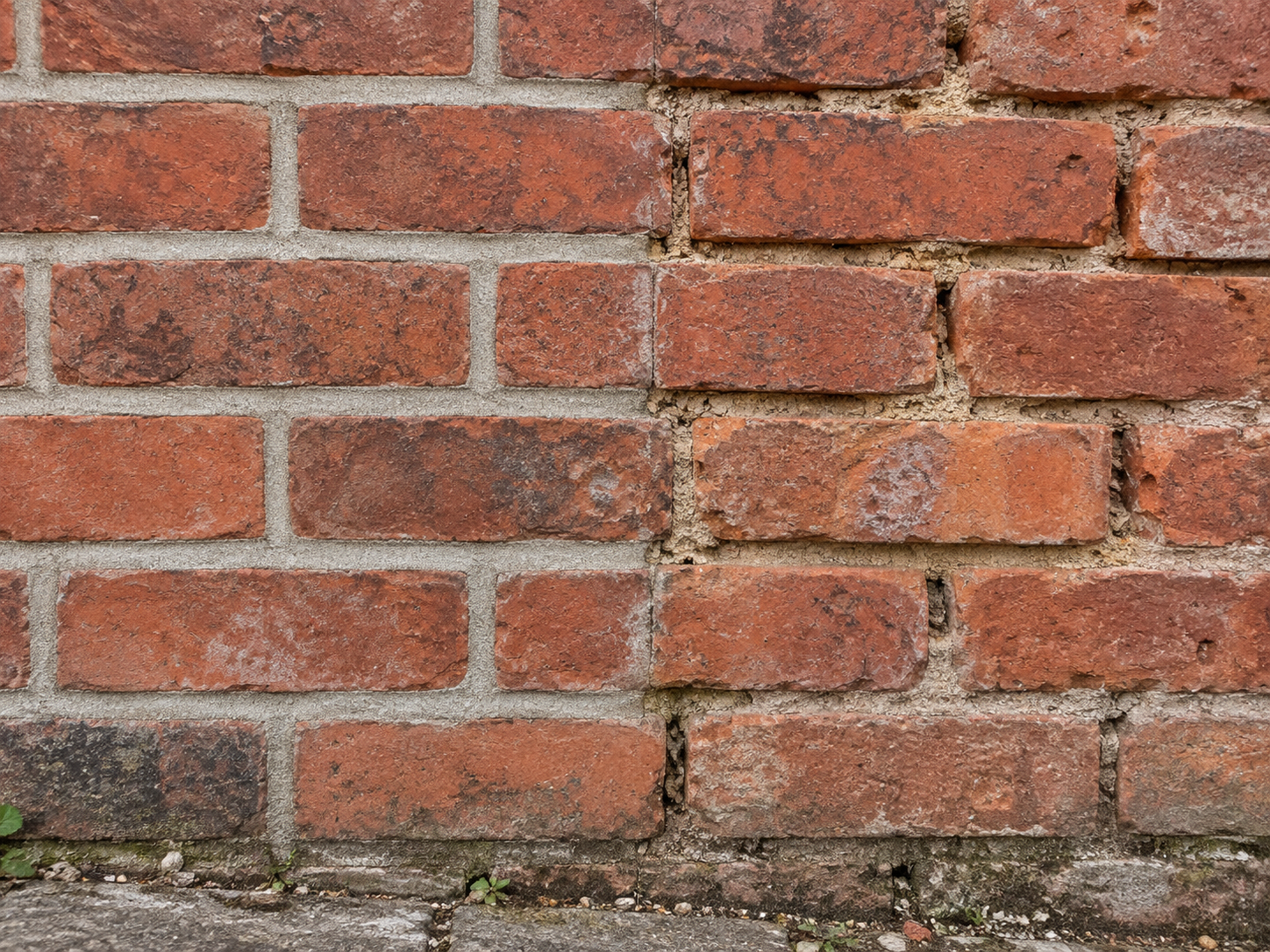
Green: observe and maintain
Minor surface weathering, with joints still full and firm, is often a maintenance issue rather than an immediate repointing job. Keep gutters and downpipes clear, reduce repeated splashback, and photograph the area periodically.
Amber: arrange a professional inspection
Book an assessment when joints are clearly open or powdering, damage is spreading across an elevation, water staining keeps returning, or repairs look incompatible with the surrounding wall. This is the point where early, targeted work can prevent a larger repair later.
Red: keep clear and seek prompt advice
Treat leaning or bulging masonry, loose bricks, movement around openings, significant stepped cracks, or falling debris as a potential safety issue. Keep people away from the affected area. Do not try to stabilise it with filler, sealant or a DIY patch.
Why Northampton walls need a case-by-case assessment
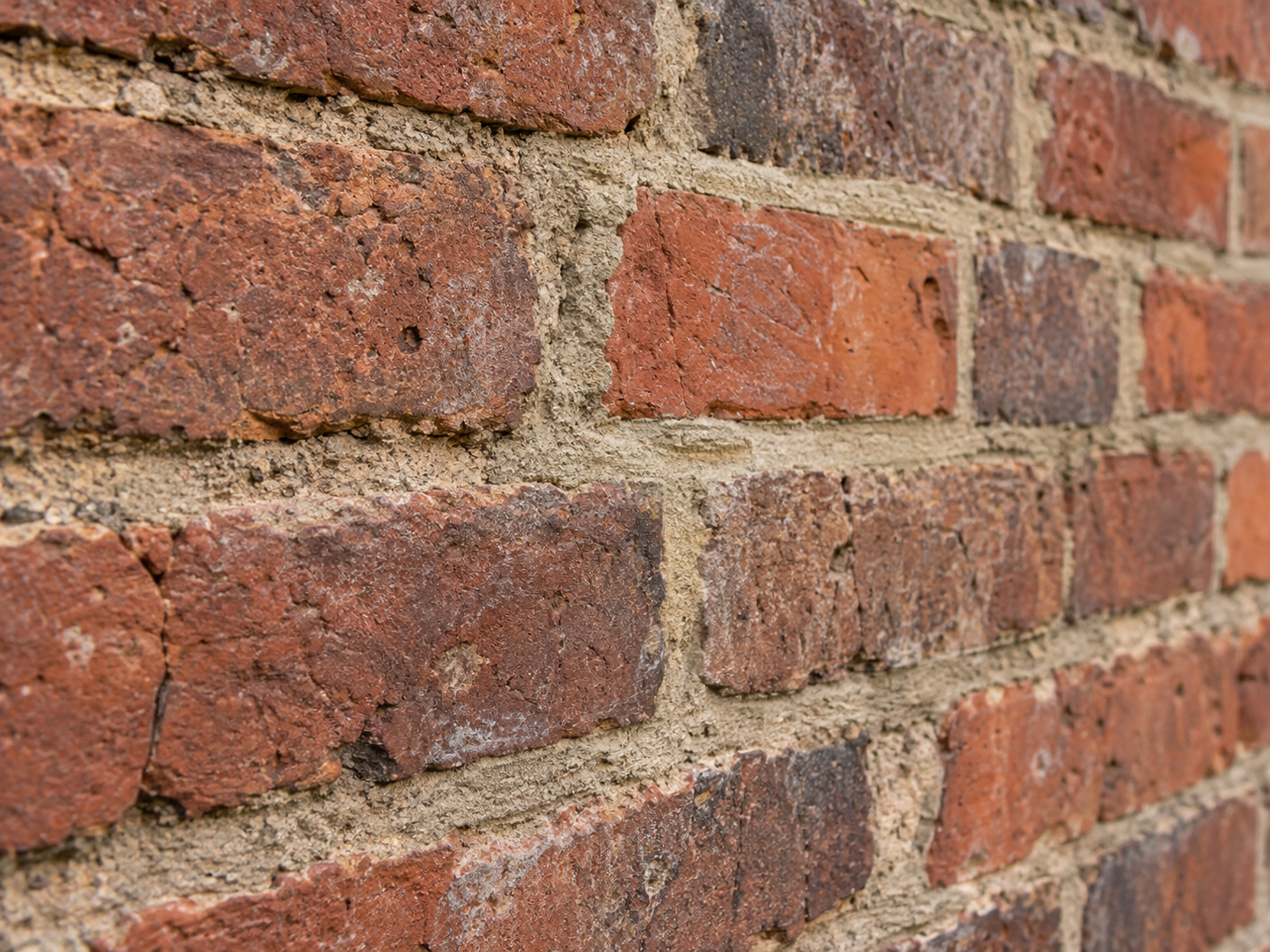
Exposure is not the same on every side of a house. A sheltered rear garden wall can weather very differently from a front elevation facing prevailing rain and traffic splash. Chimney stacks, parapets, sills and low-level walls also experience different moisture loads.
The building's age and construction matter too. For an older property, the correct mortar is not automatically “lime” or “cement”. The existing masonry, original mortar, brick or stone type, exposure and past repairs all need to be considered together. Historic England's guidance stresses compatible materials and careful repair methods for traditional masonry.
That is why a reputable assessment should start with the wall itself: what is sound, what has failed, where moisture is coming from and whether any brick or stone needs repair alongside the joints.
What happens if you leave failing joints alone?
Open or eroded joints can allow more water into vulnerable parts of a wall. Repeated wetting and drying may worsen mortar loss, encourage staining and contribute to damage at brick faces or around openings. The exact consequence depends on the construction and the source of moisture, so it is better to address the cause than to treat every cosmetic mark as a repointing emergency.
The practical priority is to stop avoidable water ingress: repair defective rainwater goods, investigate persistent leaks and ask a masonry specialist to assess joints that are genuinely deteriorated. A sound wall does not benefit from unnecessary wholesale raking out.
What a careful repointing job should involve
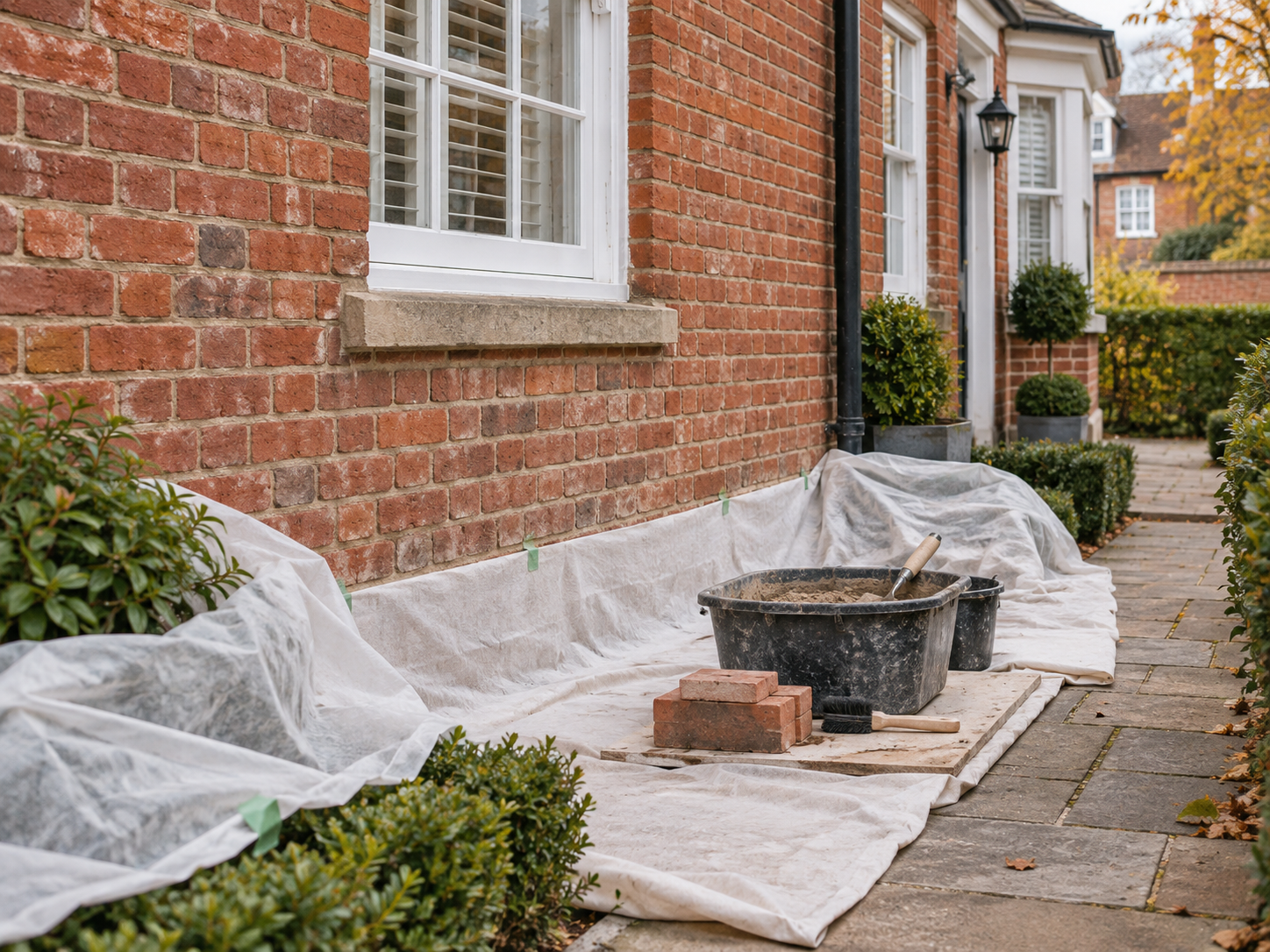
A proper scope of work is based on condition rather than a one-size-fits-all rule. It normally includes identifying defective joints, removing only unsound mortar with care, preparing the joints, selecting a compatible mortar and finishing it to suit the existing wall. Nearby bricks, stonework, flashings and rainwater goods may also need attention if they are part of the cause.
Ask the contractor to explain:
- which areas need repointing and why;
- whether moisture or drainage defects are being dealt with first;
- how the mortar choice has been matched to the building;
- whether damaged bricks or stone need separate repair; and
- how access, protection and safe working at height will be managed.
United Masonry Northampton provides masonry repair, bricklaying and chimney repair alongside repointing, so a visible mortar issue can be considered in its wider context.
When should you book an estimate?
Book when you can see a pattern of decay, not just one weathered grain of mortar: open joints on an exposed wall, recurring damp marks, debris below a chimney, or a repair that has started to fail. United Masonry Northampton has been serving the area since 2015 and offers a free estimate for suitable masonry work.
Photographs taken from ground level, the approximate age of the property and a note of any recurring damp or rainwater issue will help make the first conversation more useful. For a Northampton assessment, use the contact page.
Frequently asked questions
Can I repoint just the bad area?
Often, yes — if the deterioration is localised and the cause is understood. The right scope depends on the wall's condition; avoid covering sound joints merely for a uniform appearance.
Does every old house need lime mortar?
No. Older masonry may need a more vapour-permeable, compatible repair, but the appropriate mortar must be selected after considering the existing construction, materials and exposure. A blanket rule is not a specification.
Is a crack always a repointing issue?
No. A crack can be superficial, moisture-related or a sign of movement. If it is stepped, widening, recurring, near an opening, or paired with bulging/loose masonry, arrange professional advice rather than treating it as a routine joint repair.
Can I check my chimney myself?
Only from ground level. Never climb onto a roof or use a ladder to inspect unstable-looking masonry. If you see open joints, missing material, staining or debris below, book a professional inspection.
Will repointing stop damp?
It can help where defective joints are allowing water in, but damp has many causes. Gutters, downpipes, roofs, ground levels, ventilation and internal plumbing all need to be considered before assuming the mortar is responsible.
The sensible next step
Use the checklist to record what you can safely see, then get advice before a small defect becomes a larger one. A focused survey and compatible repair are more valuable than a quick cosmetic patch.
Need a Northampton masonry assessment? Contact United Masonry Northampton to request a free estimate.